Designing Dendrova
OVERVIEW
Dendrova is a learning management platform designed at Enerva to help individuals and organizations access training and educational resources.
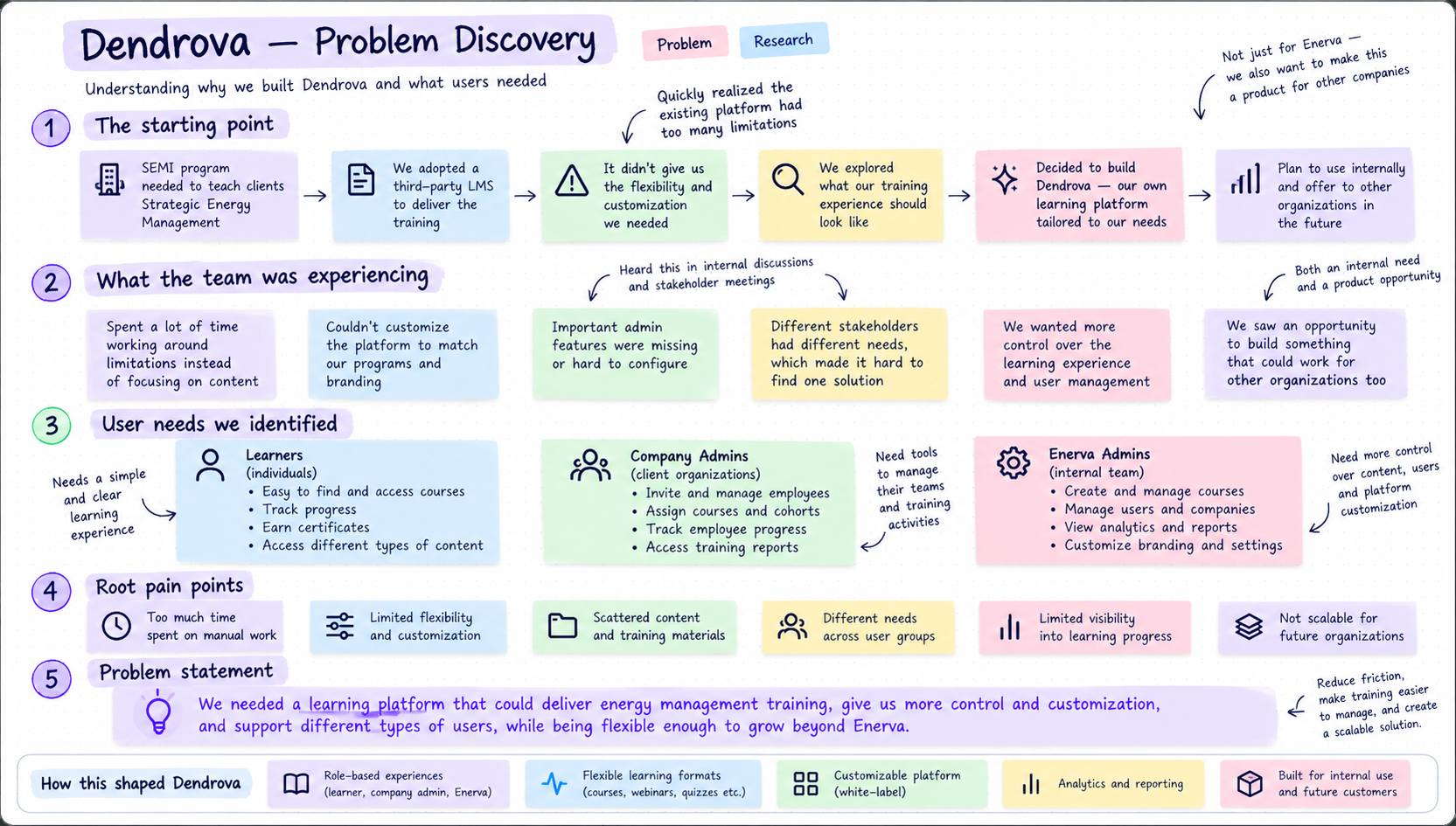
The project started with a need to teach clients Strategic Energy Management (SEM) through the SEMI program. We initially adopted a third-party LMS, but soon realized it didn’t offer the flexibility and customization we needed.
This led us to build Dendrova, our own learning platform tailored to our training needs, with plans to eventually offer it to other organizations as a standalone product.
As the sole product designer, I led the end-to-end design of the platform, covering the learner experience, company administration, and internal management tools.
PROBLEM
Since we were building Dendrova from scratch, one of the biggest challenges was figuring out how to make the platform work for different types of users.
We needed learners to easily access courses and track their progress, while companies needed a way to manage employee training. On our end, we also needed more control over courses, users, and how the platform could be customized.
As the sole designer, I had to bring all these features together without making the platform difficult to use, while also keeping in mind that we planned to offer Dendrova to other organizations.
RESEARCH
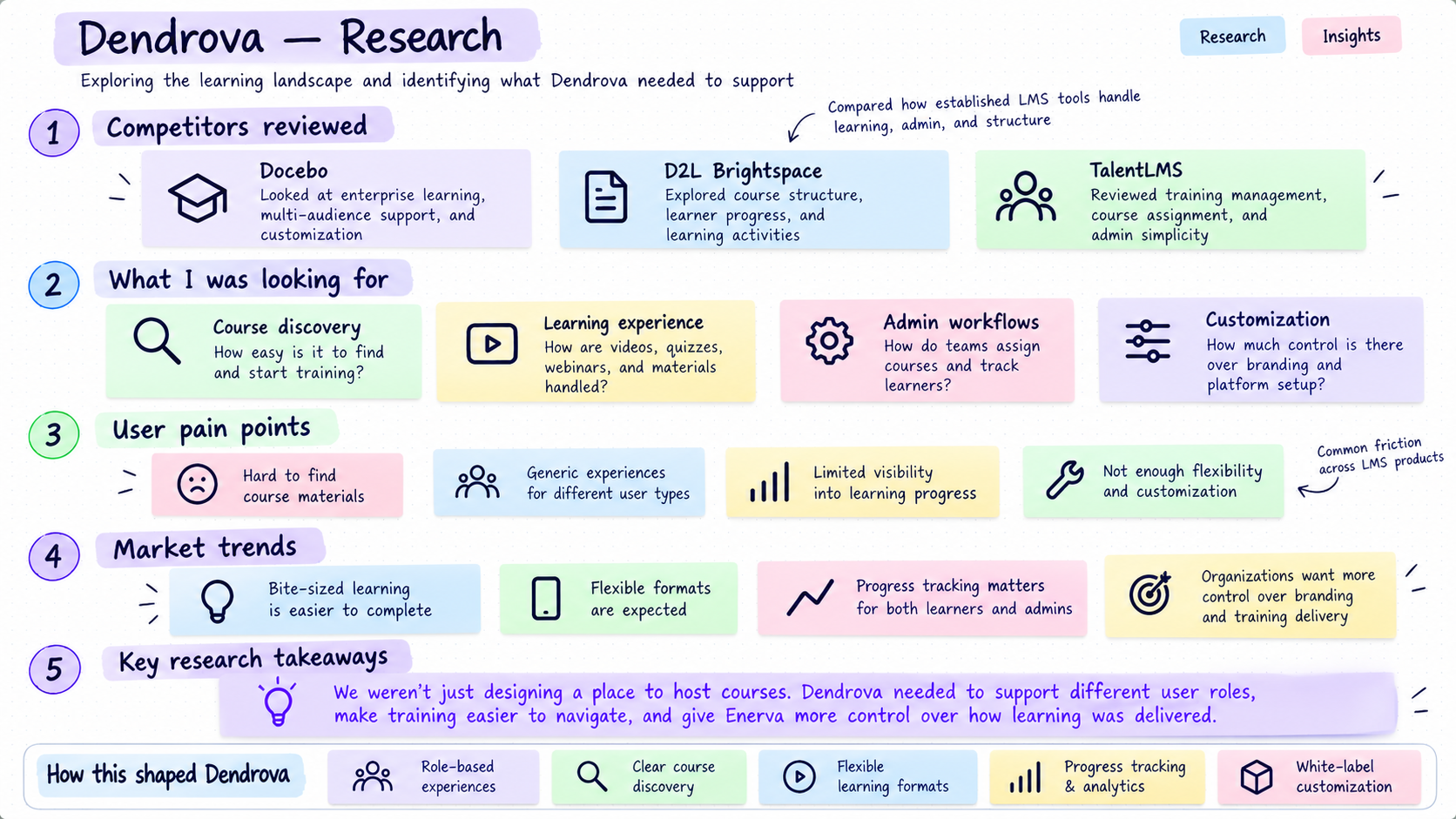
Before designing Dendrova, I looked at existing LMS platforms like Docebo, D2L Brightspace, and TalentLMS to understand how they handled course delivery, learner progress, and training management.
I also explored common user pain points and LMS trends to see what mattered most. A few things stood out:
Simpler course discovery
Users needed an easier way to find courses and get started on their training.
Better visibility into progress
Admins needed a clearer view of how learners and teams were progressing through their training.
More flexibility and customization
Organizations wanted more control over branding, content and how training was delivered.
These insights helped shape Dendrova’s direction, especially around role-based experiences, course discovery, progress tracking, and white-label customization.
DIRECTION
One platform, three different experiences
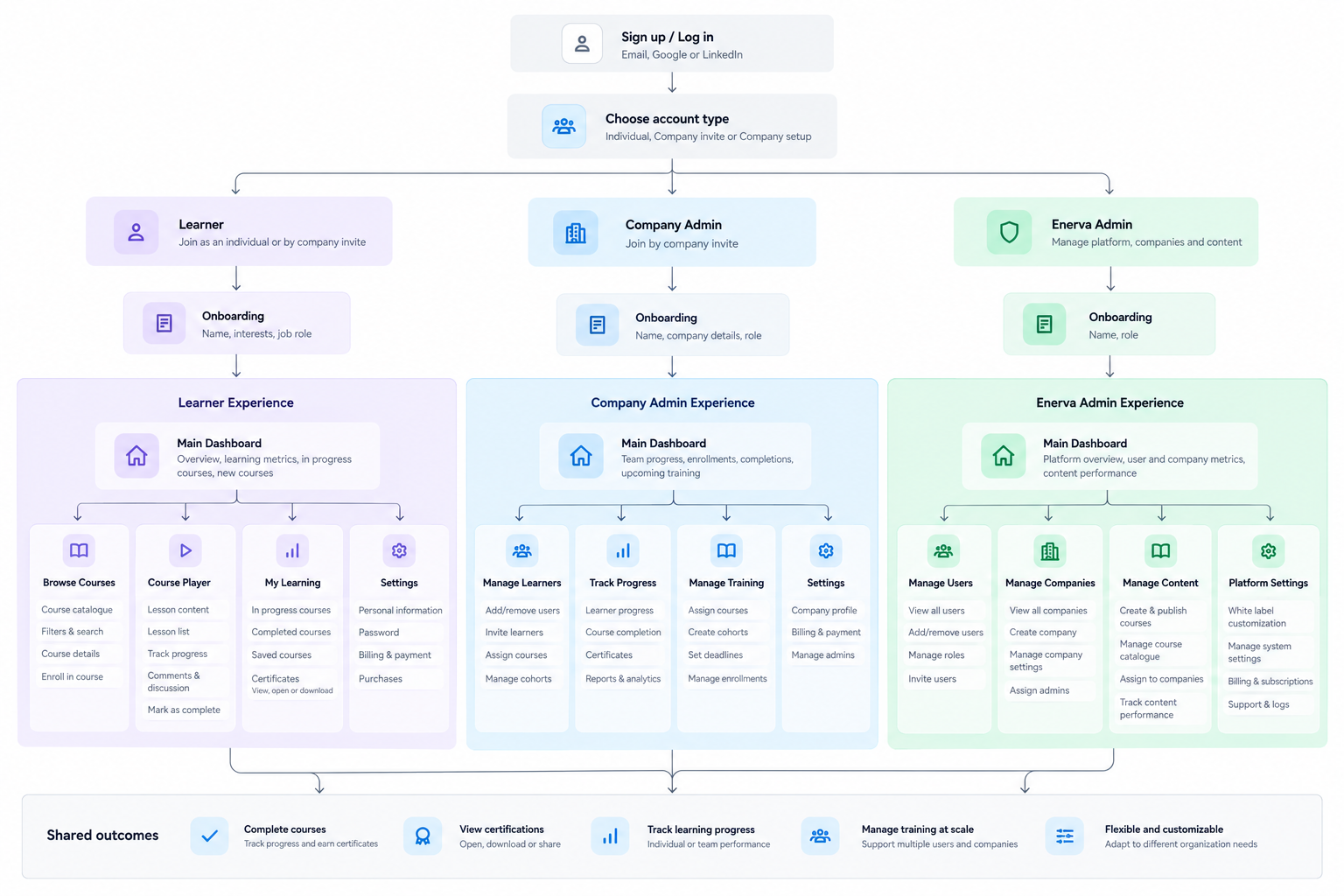
After the research, I started mapping out the information architecture and key user flows to understand how everything would connect.
Since Dendrova was built for different types of users, I structured the platform around three main experiences: Learners, Company Admins, and Enerva Admins.
Learners needed an easy way to find courses, complete training, and earn certificates. Company Admins needed to manage employees, assign courses, and track their progress, while Enerva Admins needed full control over courses, users, and the platform itself.
This approach helped me create a clear navigation structure for each user role while keeping the experience consistent across the platform.
SOLUTION
1. Making learning easier to discover and access
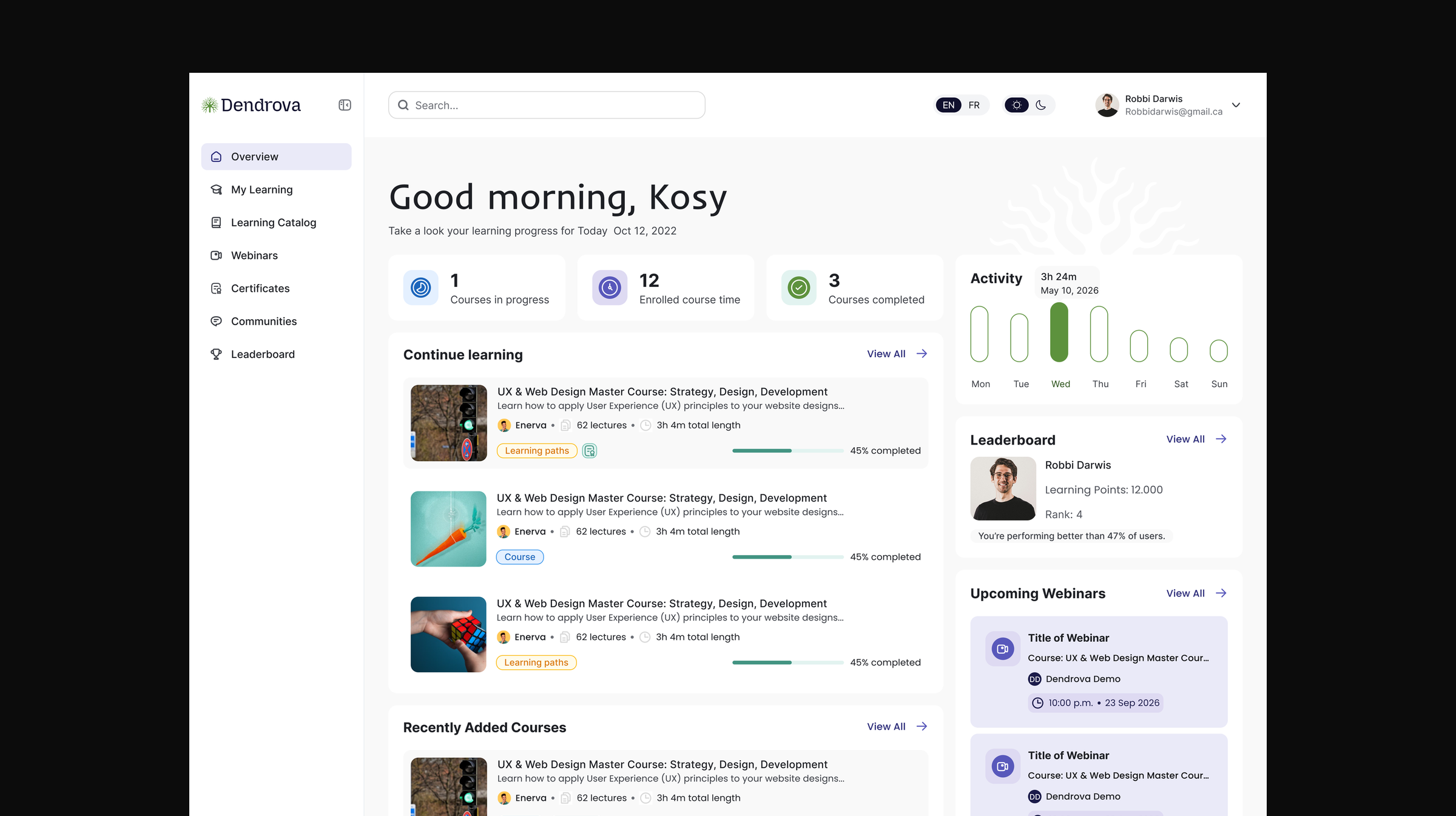
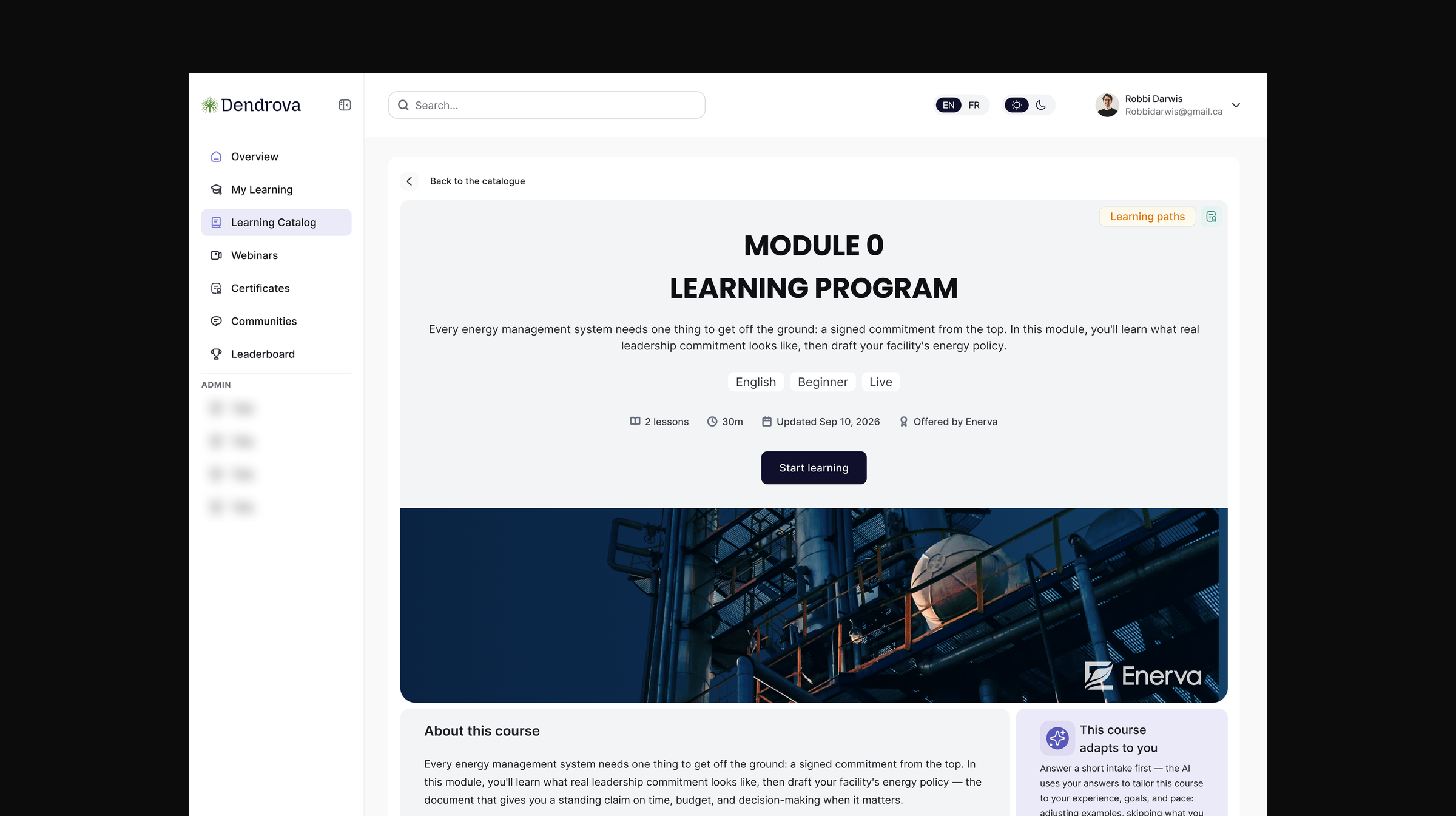
I designed a learner dashboard that brings courses, learning progress, and upcoming training into one place.
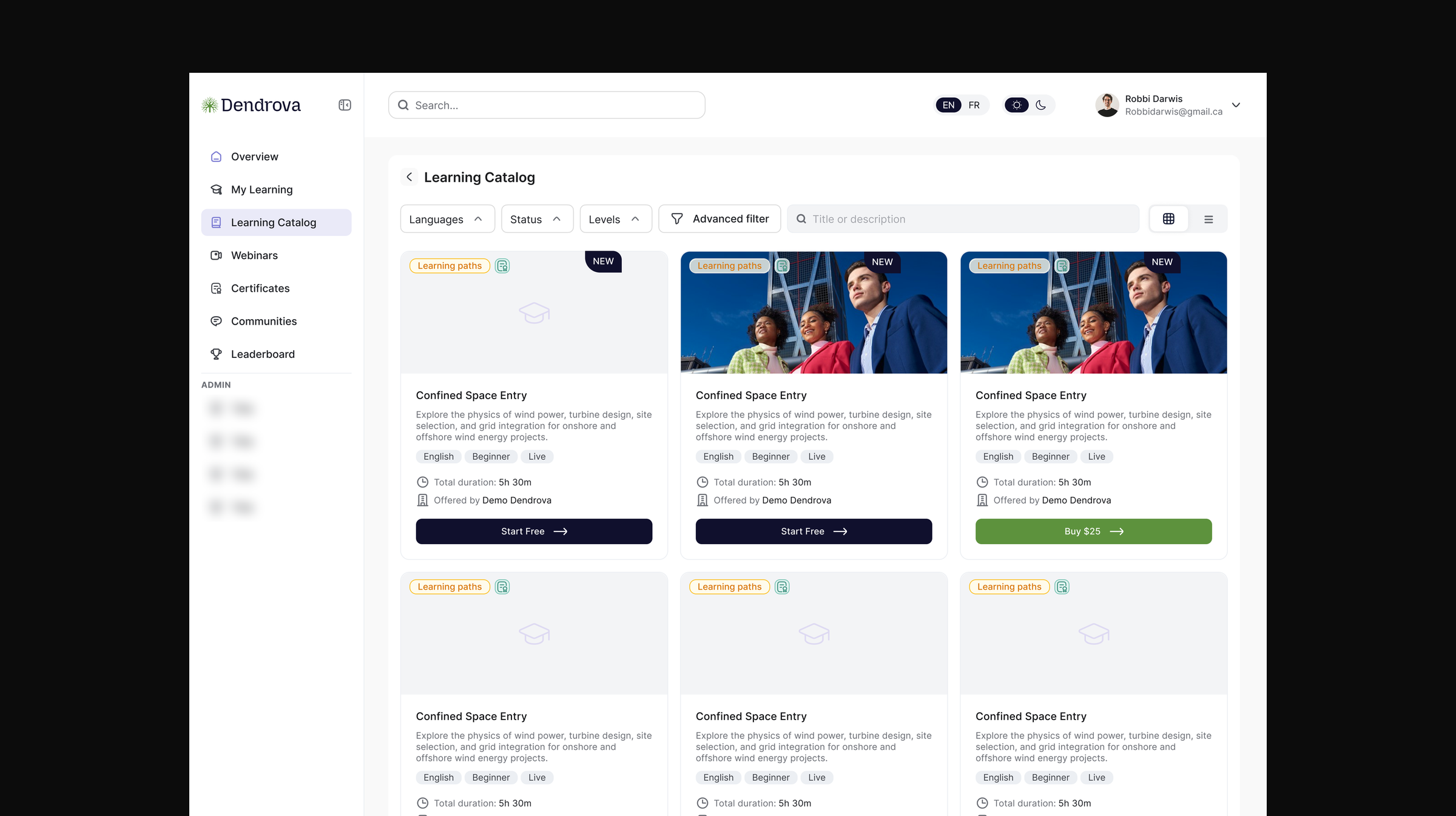
Learners can browse the learning catalog, search and filter courses, and either enroll for free or purchase paid courses. They can also view course details before enrolling, continue learning where they left off, and track their progress.
2. Simplifying course creation for admins
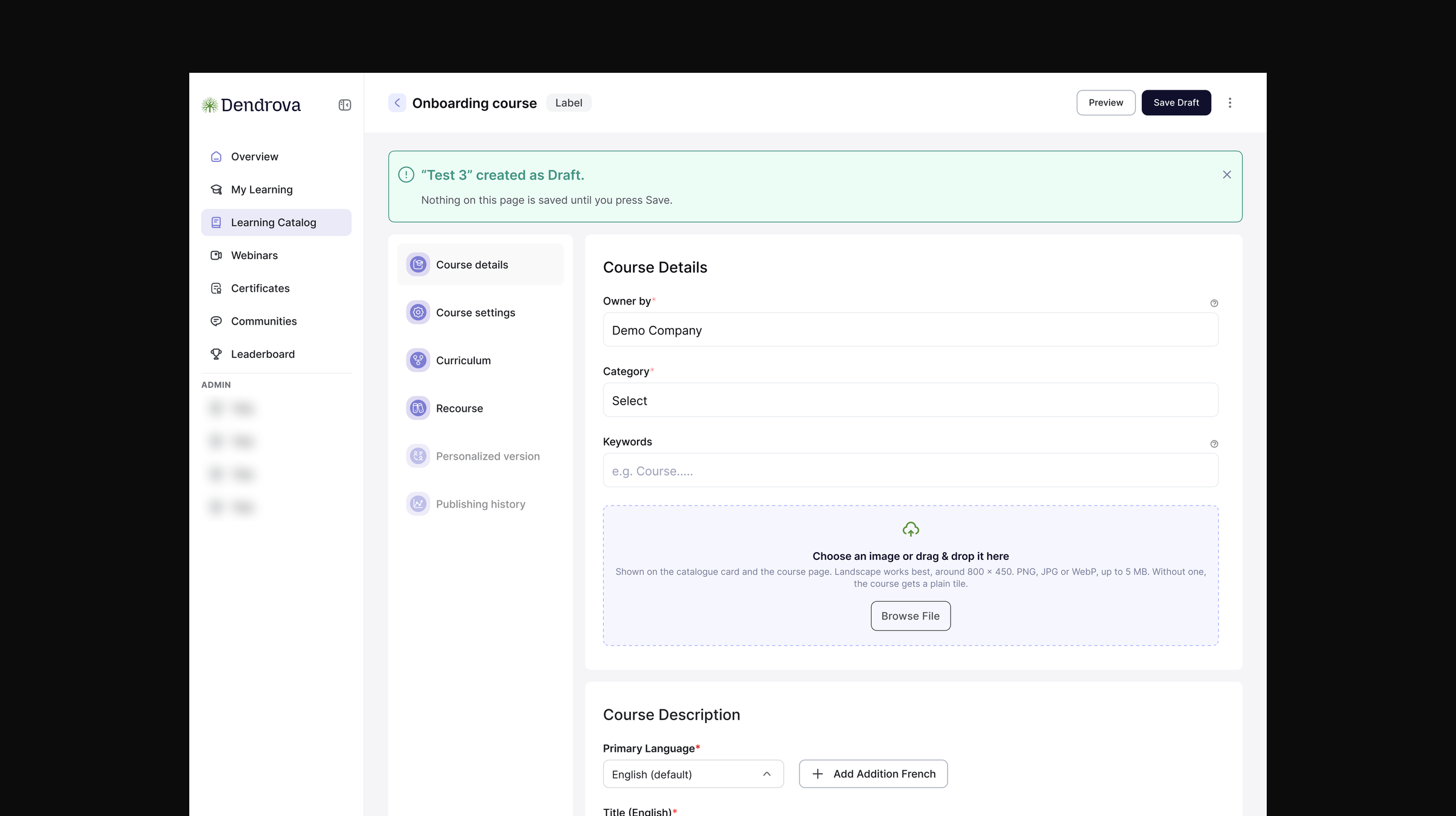
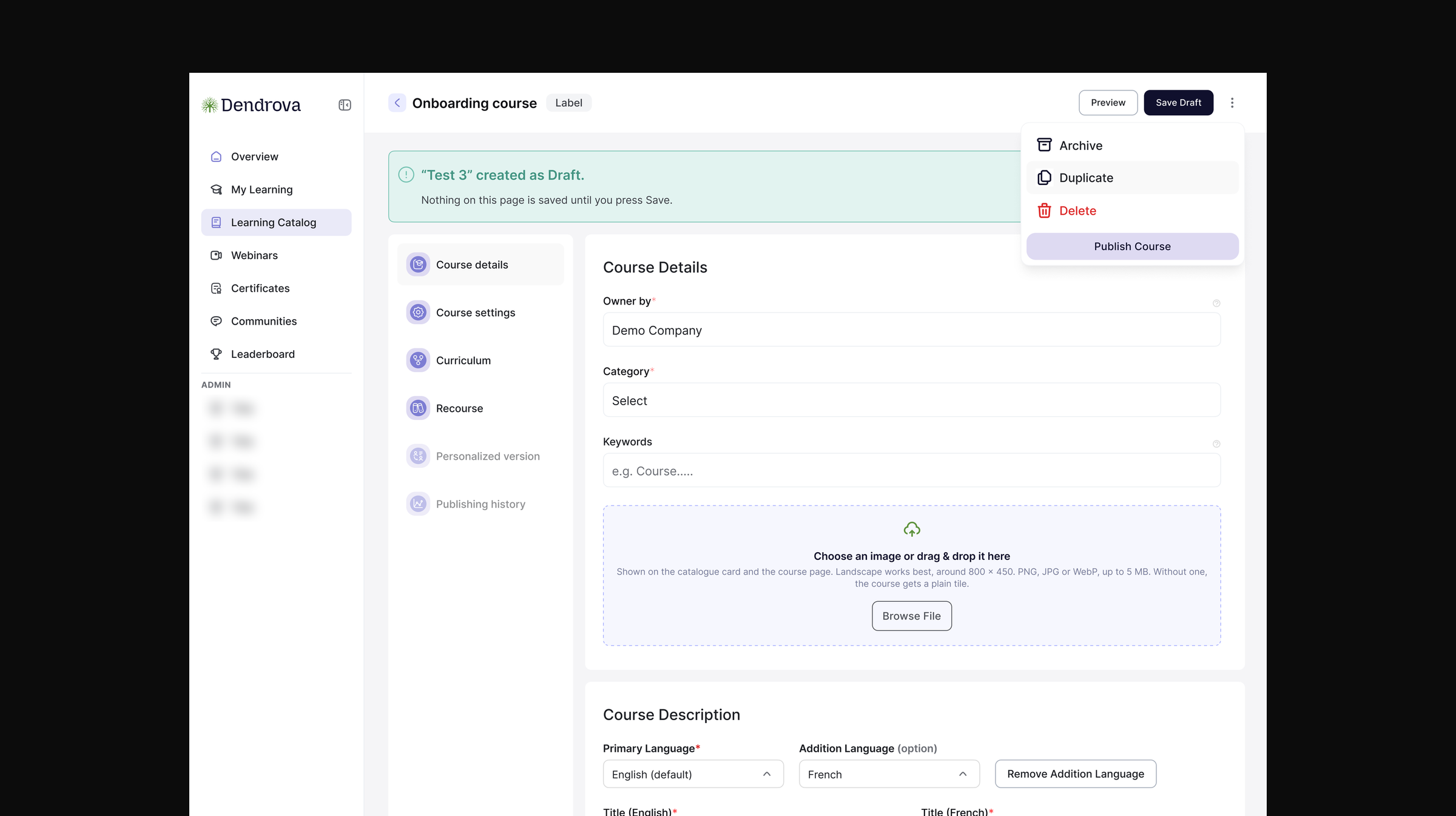
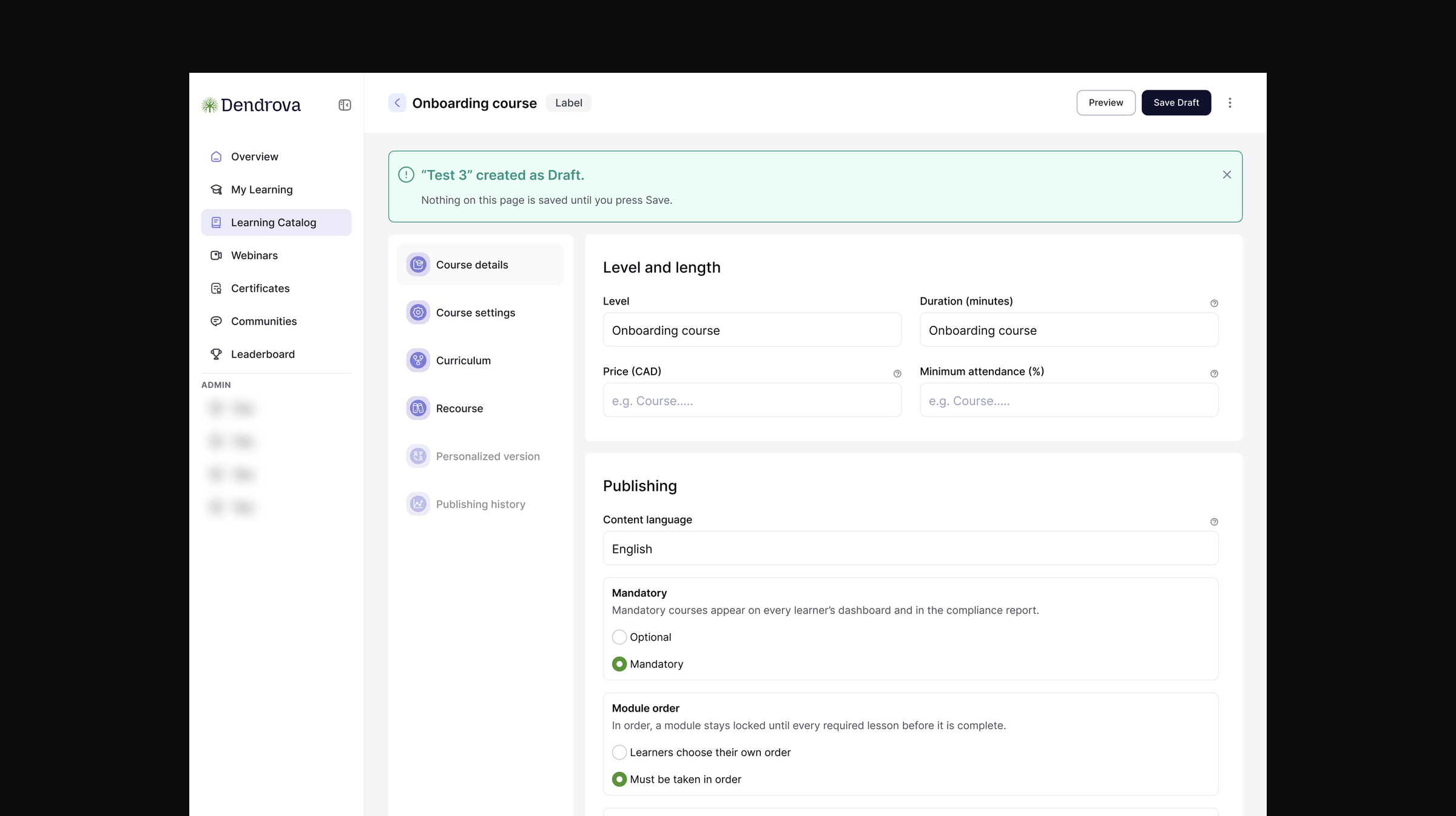
One of the key features I designed was the course creation workflow, giving admins more control over how training content is created and delivered.
Instead of a complicated setup process, I broke course creation into clear steps, from adding course details and configuring settings to organizing lessons and modules. Admins can also set learning requirements, manage course languages, and save drafts before publishing.
3. Giving admins clear visibility into learning progress
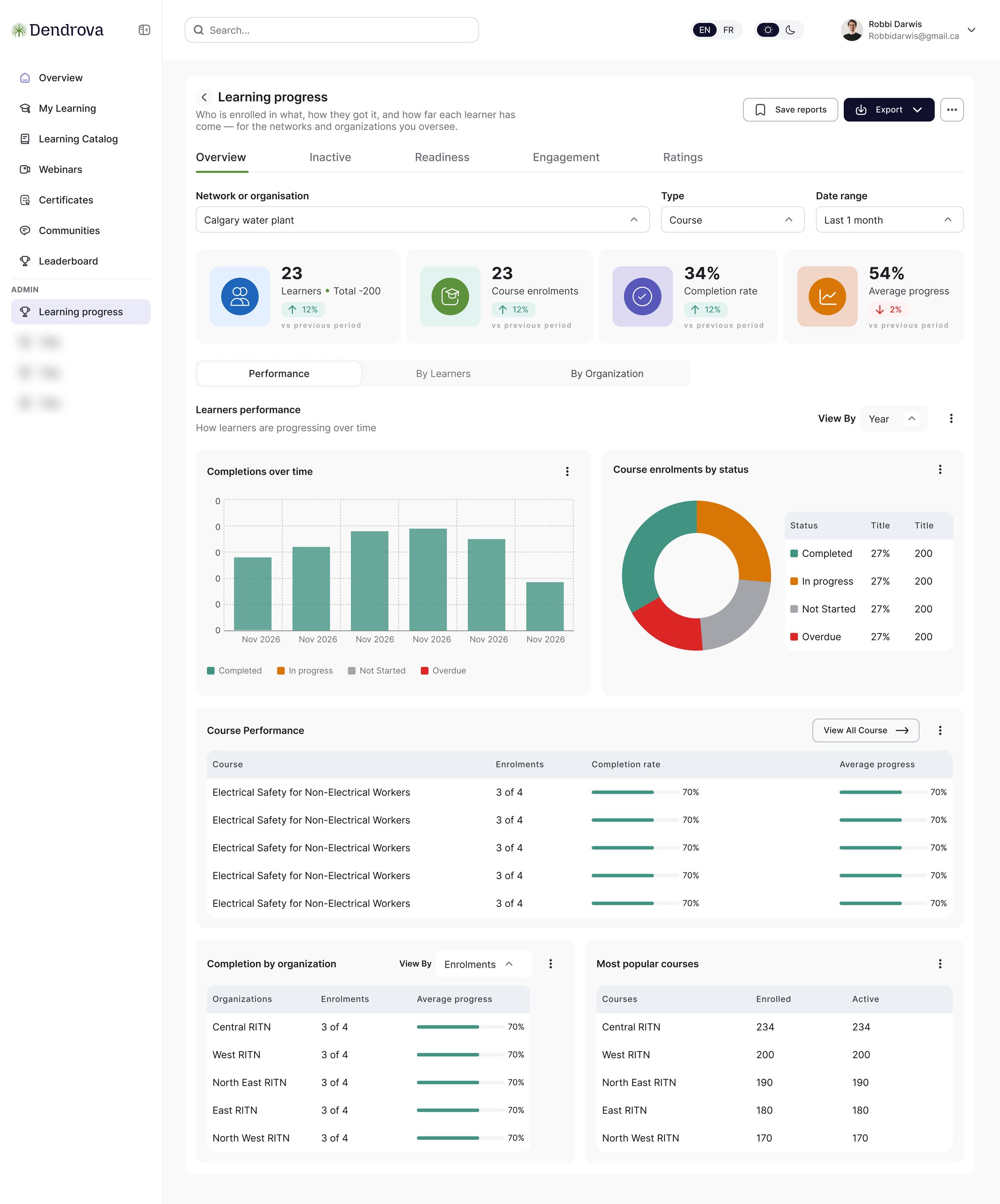
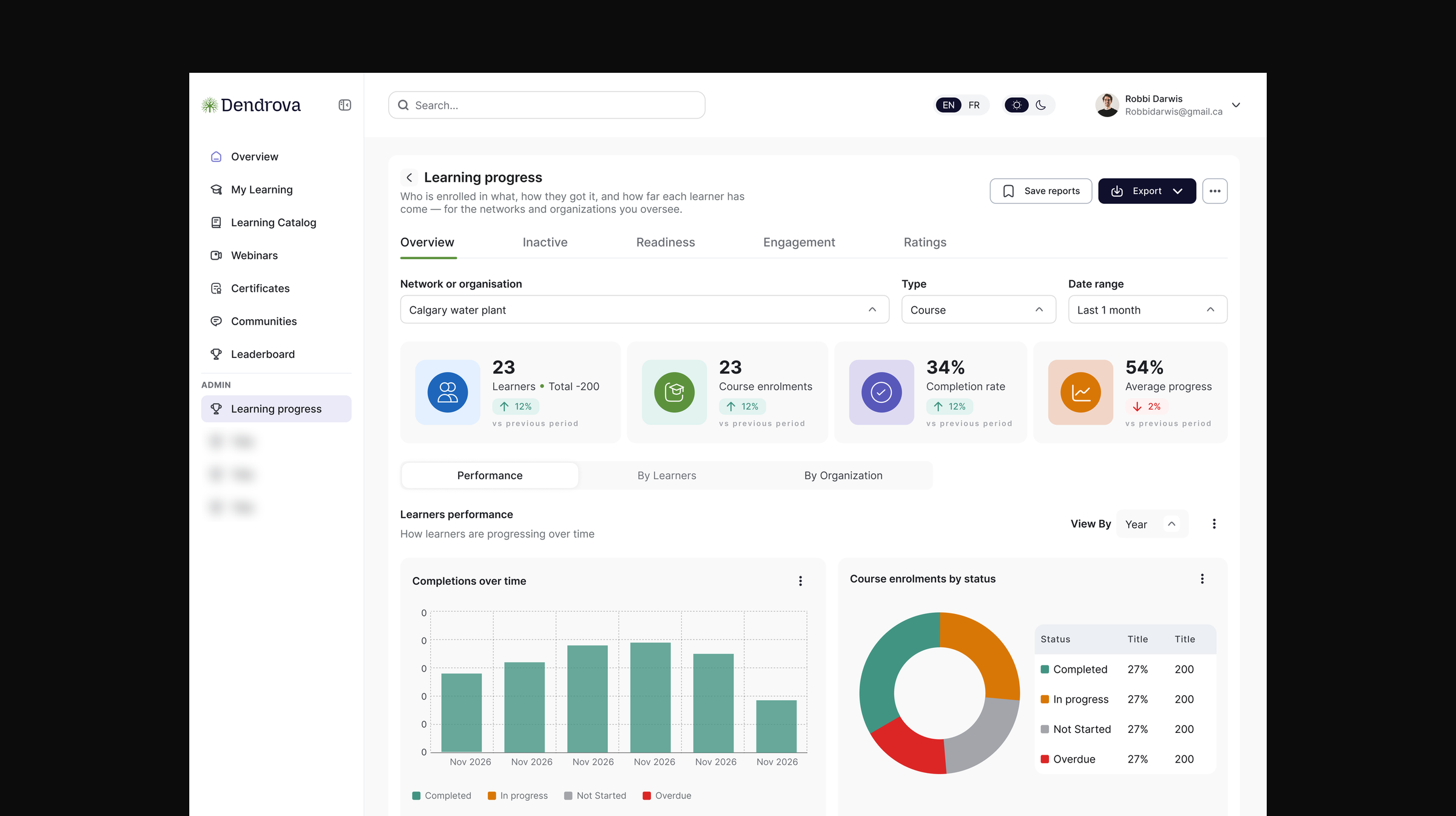
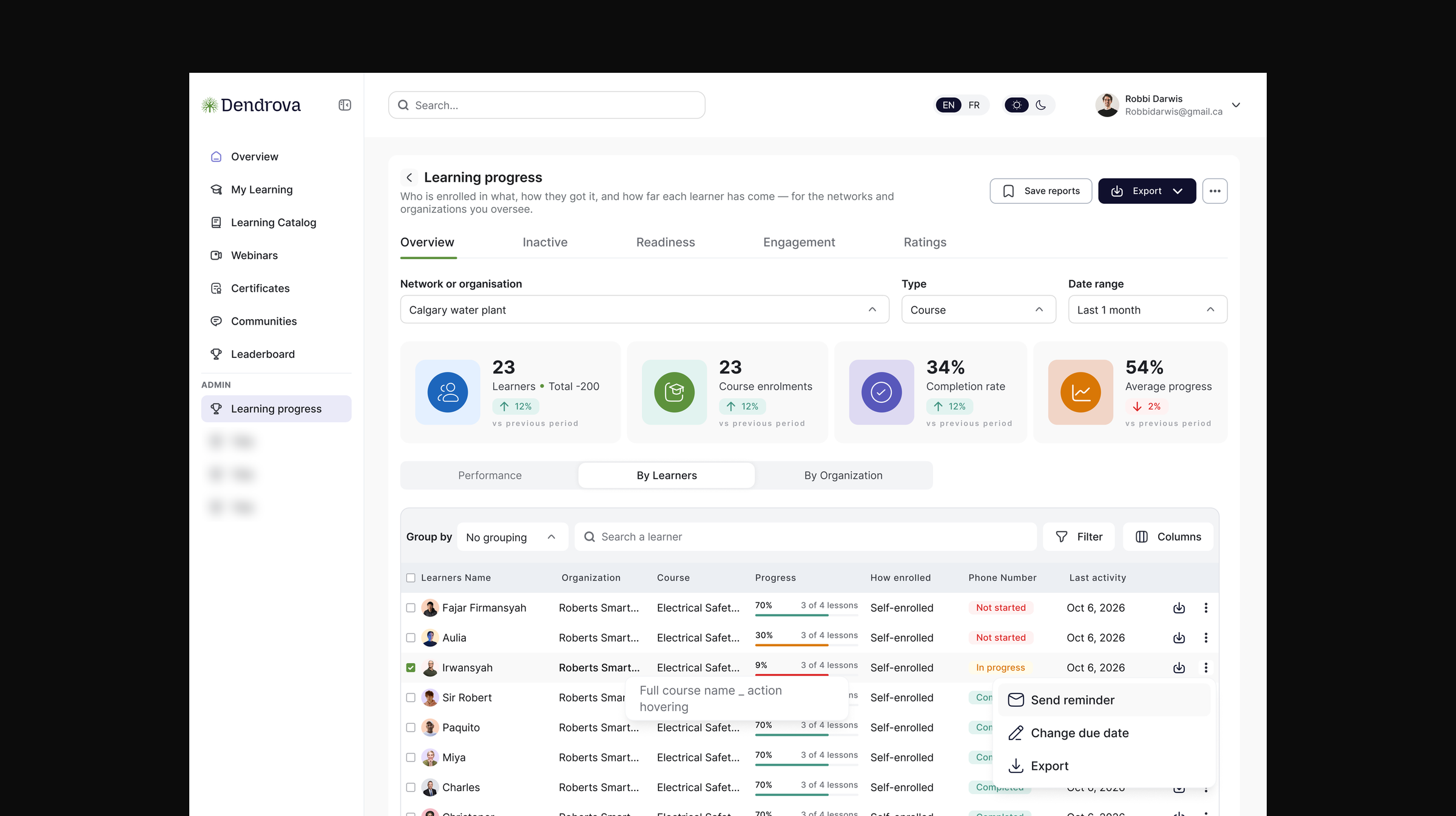
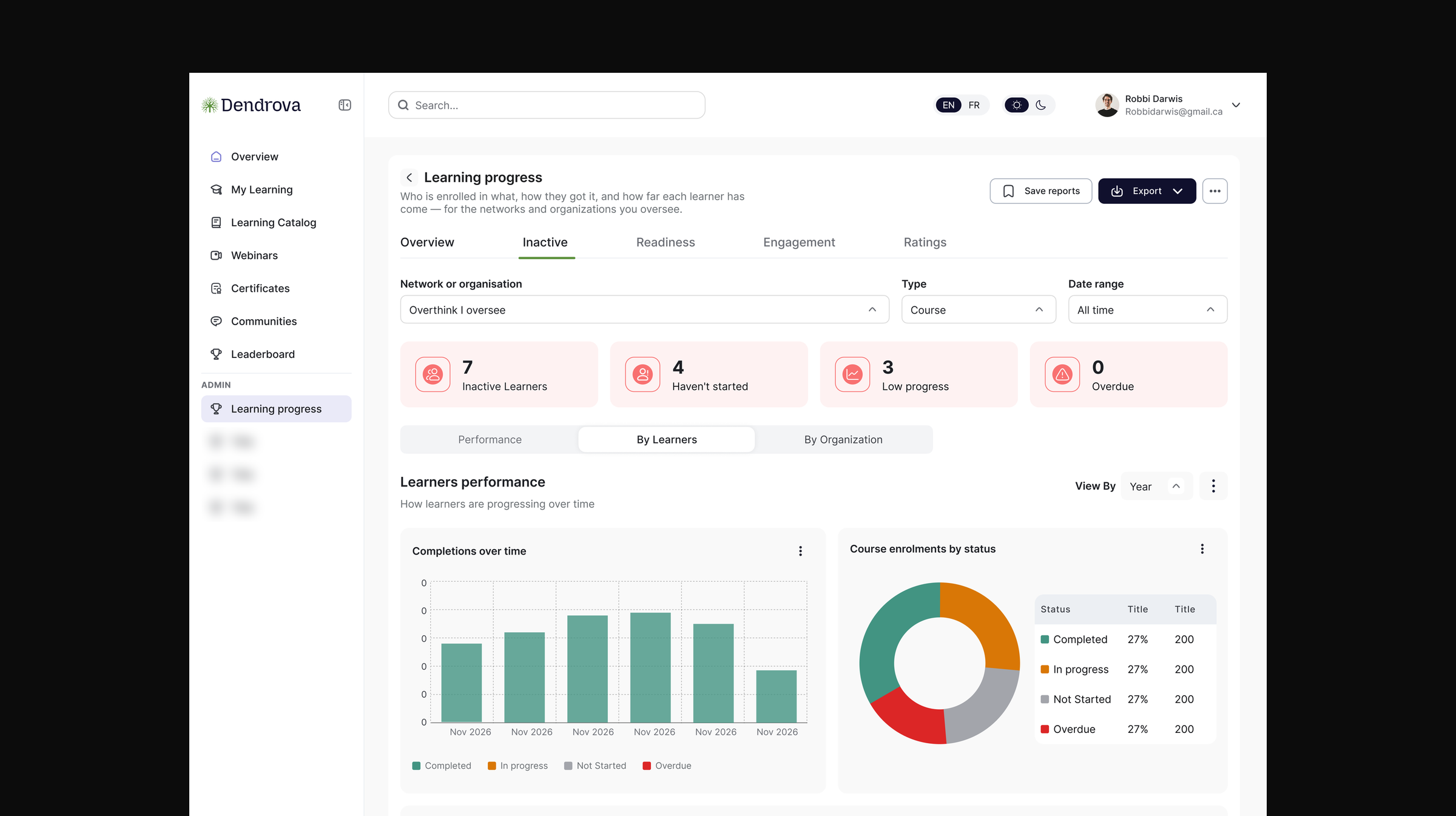
I designed a learning analytics dashboard that gives admins a clearer view of how learners and organizations are progressing through training.
Admins can track enrollments, completion rates, and learner activity, then drill down into individual learners or organizations. I also included tools to identify inactive learners, send reminders, adjust due dates, and export reports, making it easier to follow up when learners fall behind.
IMPACT
What started as a solution for Enerva’s internal training needs became a learning platform used to onboard and train over 100 clients on Strategic Energy Management through the SEMI program.
Dendrova gave us more control over how we created and delivered training, while providing learners with a central place to access courses and track their progress.
The platform was also designed with future growth in mind, creating an opportunity for Enerva to offer Dendrova to other organizations. That opportunity is already paying off: we’ve signed contracts with two companies who now use Dendrova as their designated LMS.
LEARNINGS
Thinking beyond the UI
Dendrova was a project I really enjoyed working on because I got to be involved in building a product from scratch.
Being the sole designer meant I had to make a lot of design decisions and think about how everything would work together. One thing I found challenging was keeping the experience simple for learners while giving admins all the tools they needed to manage training.
I also learned to think ahead. We were initially building Dendrova for our SEMI clients, but knowing it could eventually serve other organizations made me more intentional about scalability and creating reusable design components.
Looking back, this project helped me grow more confident in making design decisions, taking ownership of my work, and thinking beyond just the screens I was designing.